ITWizrd Insights

Web Design & Digital
Tips & Guides

Practical advice on bespoke websites, local SEO and digital marketing — helping UK small businesses grow online.

Articles & Guides

Your website never sleeps. While you're at dinner, asleep, or on holiday, potential customers are Googling your services and forming opinions about your business within the first three seconds of landing on your page. That's a staggering opportunity — or a staggering risk, depending on how your site performs.

The difference between a digital brochure and a sales tool comes down to intent. A brochure tells people what you do. A sales tool anticipates what a visitor needs, answers their key questions, handles their objections, and guides them naturally toward taking action — booking a call, filling in a form, or making a purchase.

Clear calls-to-action matter more than ever. Every page on your website should answer one question: what do I want this visitor to do next? If the answer isn't obvious within seconds, you're leaving money on the table. For most small businesses, that means a prominent phone number or WhatsApp link, a short contact form, and a single benefit-led headline that speaks directly to the customer's problem.

Page speed is a conversion issue, not just a technical one. Studies consistently show that a one-second delay in page load time can reduce conversions by 7%. On mobile — where the majority of UK web traffic now originates — slow-loading pages cause visitors to bounce before they even see your offer. A bespoke, well-optimised website built on clean code will always outperform a bloated template in this regard.

Social proof closes the gap between interest and action. Testimonials, case studies, Google review scores, and client logos all serve a single purpose: they reassure a nervous buyer that other people have trusted you and been rewarded for it. If your website doesn't prominently feature this kind of proof, you're making your visitors work harder than they should.

The businesses that get this right see measurable results — more enquiries, higher quality leads, and customers who already understand your value before the first conversation. Your website isn't a cost. It's the hardest-working member of your team. Treat it accordingly.

If you run a local business — whether you're a plumber in Perth, a salon in Stirling, or a consultancy in Edinburgh — local SEO is arguably the highest-return marketing activity you can invest in. When someone searches "web design near me" or "emergency plumber Glasgow", appearing in Google's local pack (the map results at the top of the page) can transform your enquiry volume overnight.

Google Business Profile is your foundation. If you haven't claimed and fully optimised your Google Business Profile listing, that's step one. Fill every field, add high-quality photos, specify your exact service areas, and most importantly — keep it active. Businesses that respond to reviews, post updates, and add new photos consistently rank higher than dormant listings, all else being equal.

Review velocity matters more than total review count. A business with 12 reviews in the last month will typically outrank a competitor with 200 reviews accumulated over five years. Actively ask every happy customer for a Google review immediately after the job is done. Make it easy — a short link sent via WhatsApp or text removes all friction.

On-page local signals tell Google where you operate. Your website should mention your city, region, or service area naturally throughout the content — in your homepage headline, in service page copy, and in your page titles and meta descriptions. An address in the footer, embedded Google Map, and local business Schema.org markup all reinforce these signals.

Build local citations and links. Citations are mentions of your business name, address and phone number (NAP) on directories like Yell, Thomson Local, Checkatrade, and industry-specific sites. Consistency across all listings is crucial — even a slight difference in how your address is formatted can dilute your local ranking signals.

Local SEO in 2026 rewards consistency and authenticity over tricks. Build genuine relationships, earn real reviews, publish content that genuinely helps people in your area, and make sure your website and Google Business Profile tell a clear, consistent story. Done right, it puts you in front of customers who are already actively looking for exactly what you offer.

A leaky website is worse than no website at all, because it gives you the false confidence of having an online presence while actively sending potential customers to your competitors. Here are the five most common culprits.

1. It loads slowly on mobile. Over 60% of UK web traffic now comes from smartphones. If your site takes more than three seconds to load on a 4G connection, the majority of mobile visitors will leave before they ever see your content. Run your site through Google PageSpeed Insights — a score below 50 on mobile is a serious problem.

2. The mobile layout is broken or frustrating. Beyond speed, the experience matters. Text that's too small to read without zooming, buttons that are too close together to tap accurately, or content that overflows the screen horizontally — these are all conversion killers. If your website wasn't built mobile-first, it likely has issues you haven't noticed because you tend to view it on a desktop.

3. There's no clear next step. Visitors shouldn't have to work out what to do next. If your homepage doesn't have a clear, prominent call-to-action — a phone number, a booking button, a contact form — a large proportion of interested visitors will simply leave without making contact. Decision paralysis is real; remove it by giving people one clear action.

4. Your content is vague or outdated. "We offer a wide range of services to meet your needs" tells a potential customer nothing. Specific, benefit-led copy that addresses the customer's actual problem converts far better than generic filler. And if your site still references your opening hours from 2019 or lists services you no longer offer, that erodes trust faster than almost anything else.

5. There's no social proof. People buy from people they trust. If your website has no testimonials, no case studies, no client logos, and no reviews, you're asking visitors to take a leap of faith that most won't take. Adding even three or four genuine client testimonials can have an immediate and measurable impact on enquiry rates.

One of the most common misconceptions among small business owners is that getting a logo designed means their branding is sorted. It isn't — and understanding why makes all the difference between a business that looks professional and one that truly resonates with the right customers.

A logo is a mark. A brand identity is a system. Your logo is a single visual symbol that identifies your business. Your brand identity is everything that surrounds and supports it: your colour palette, your typography, your tone of voice, your imagery style, your icon set, how your emails are written, how your team answers the phone. It's the totality of every impression your business makes.

Consistency is what makes branding powerful. When a potential customer sees your social media posts, visits your website, receives a quote document, and then meets you in person, each touchpoint should feel like it comes from the same coherent source. That consistency builds familiarity. Familiarity builds trust. Trust is what ultimately converts a stranger into a paying customer.

Your brand is a promise, not a decoration. Every visual and verbal choice you make communicates something about your values, your quality level, and the kind of customers you want to attract. A chaotic, inconsistent visual identity signals disorganisation. A polished, considered identity signals professionalism and reliability — before a single word is read.

You can start small but think systematically. You don't need a 50-page brand guidelines document to run a small business. But you do need to make deliberate decisions about your core colours (two or three at most), your primary font, and your tone of voice. Write them down. Apply them consistently. That's a brand identity.

When to invest in a proper brand refresh. If you're embarrassed to hand out your business card, if your website looks nothing like your social media, if you've rebranded informally three times but never properly, or if you're moving upmarket and attracting a different client type — it's time. A cohesive brand identity isn't a luxury. For businesses competing on quality rather than price, it's essential infrastructure.

All Articles

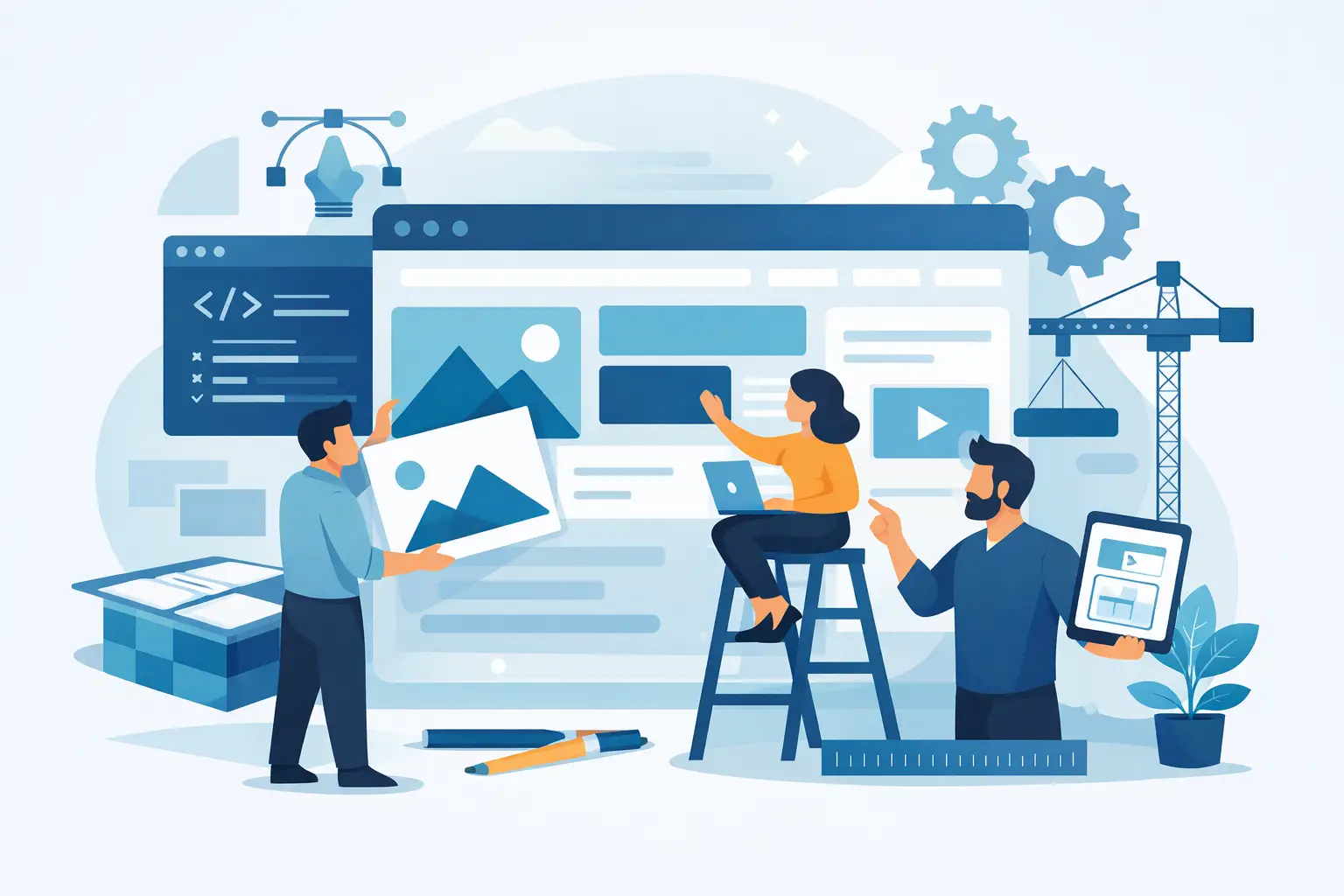
How a Bespoke Website Really Gets Built

How a Bespoke Website Really Gets Built

A lot of small business owners ask for a "new website" when what they really need is a better way to win trust, show what they do clearly, and turn visits into enquiries.

That is why the bespoke website design process is not just about choosing colours or adding a few pages. A proper build starts much earlier. It begins with your business goals, your audience, and the practical job your website needs to do once it is live.

If you have never commissioned a website before, or if your last one felt rushed, overcomplicated, or too template-led, it helps to know what good looks like. Here is the bespoke website design process explained in plain English, so you can see where value is created and why a hand-crafted build often gives better long-term results.

Why bespoke website design starts with the brief

A bespoke site should be hand crafted to your spec. That sounds simple, but it changes the whole process.

With a template-first approach, the design often leads and the business has to fit around it. With bespoke work, your requirements come first. That includes what services you offer, who you want to attract, how your brand should come across, what information visitors need, and what action you want them to take.

For a startup, that might mean building credibility quickly and making it easy for people to enquire. For a local trades business, it might mean clearer service pages, stronger trust signals, and better local visibility. For a growing company, it could mean bringing the website and brand identity into line so everything looks more professional and consistent.

This early stage matters because small decisions made here affect everything that follows. If the brief is vague, the build usually becomes slower, more expensive, and less focused. If the brief is clear, the website has a much better chance of working hard for the business from day one.

The bespoke website design process explained step by step

1. Discovery and consultation

The first stage is about understanding the business properly. This is where you discuss your goals, services, audience, competitors, preferred style, and the practical features you need.

This is also the point where a good web partner asks the questions many clients have not had asked before. What makes your business different? Which services are most profitable? What do customers usually need to know before they contact you? Where are people getting stuck on your current site, if you have one?

A proper consultation saves time later. It also helps avoid a common problem with web projects - building something that looks fine but does not support the business properly.

2. Scope, structure, and specification

Once the discovery work is done, the project needs a clear scope. This means agreeing what is being built, what pages are needed, what content is required, and what functionality should be included.

This stage often covers the site map, user journey, and technical requirements. It might also include brand elements such as logo use, fonts, imagery style, and tone of voice if the website and identity are being developed together.

This is one of the least glamorous parts of the project, but it is where reliability starts. A website built with care and expertise is not thrown together. It is planned.

3. Content and messaging

Many business owners assume design comes first, but content has a major influence on how a site should be built. A page layout depends on what you need to say and how you need to say it.

That includes service descriptions, headlines, calls to action, trust signals, testimonials, and contact prompts. For small businesses, clear wording often does more for conversions than flashy effects.

There is a trade-off here. If you want to launch quickly, you may start with a leaner set of pages and refine later. If you need stronger search visibility from the outset, more detailed content may be worth the extra time. The right approach depends on your priorities, budget, and timeline.

4. Visual design

This is the stage most people picture first, but by now the project should already have solid foundations.

The design work turns the agreed structure and messaging into a professional visual experience. That includes page layouts, colour palette, typography, spacing, imagery, and the overall feel of the site.

For startups and small businesses, good design is not about showing off. It is about making the business look credible, current, and trustworthy. Visitors make quick judgements. If the site looks dated, cluttered, or inconsistent, confidence drops.

A bespoke design gives you more control over that first impression. It allows the website to reflect the personality of the business rather than forcing the business into a pre-made style.

5. Build and development

Once designs are approved, the build begins. This is where the website becomes a working product rather than a static concept.

Pages are developed, functionality is added, mobile responsiveness is checked, forms are set up, and the website starts taking shape in a live testing environment. Ease of use matters here just as much as appearance. Your site should be simple for visitors to navigate and practical for you to manage after launch.

A bespoke build can include exactly what is needed and leave out what is not. That can make the finished site cleaner and easier to maintain. The trade-off is that bespoke work requires more thought and input than choosing a ready-made theme. For many businesses, that extra care is precisely where the value lies.

What happens before launch

A website should never go live just because the pages exist. Before launch, there needs to be a proper review.

This usually includes checking layout across devices, testing forms, reviewing page speed, proofreading content, and making sure contact details and calls to action are correct. Basic search setup should also be in place so the site is ready to be found online.

This stage is easy to underestimate, especially if you are keen to launch quickly. But rushing here often leads to avoidable problems. A broken form, awkward mobile layout, or missing message can cost enquiries before you even notice.

Launch is a milestone, not the end

One of the most useful ways to think about the bespoke website design process explained properly is this: launch is not the finish line. It is the point where the website starts doing its job in the real world.

Once live, you can see how people actually use the site. Which pages get attention? Where do enquiries come from? What questions still come up during sales calls? Those insights can shape future improvements.

For small businesses, ongoing support matters because websites are not static assets. Services change, branding evolves, and content needs updating. Having one partner who can build the site, support it, and help you refine it over time removes a lot of pressure.

That is especially valuable if you do not have an internal marketing or tech team. You need a website that is reliable, easy to use, and backed by someone who takes ownership when updates are needed.

Why this process works better for small businesses

A bespoke approach suits small businesses because it focuses on practical outcomes rather than unnecessary complexity.

You are not paying for features you do not need. You are not trying to force your services into a generic layout. And you are less likely to end up with a site that looks like dozens of others in your sector.

It also gives you room to make sensible decisions based on where your business is now. A startup might begin with a simple but polished brochure-style site and expand later. An established firm might need a deeper structure from the start. Neither option is automatically right. It depends on budget, growth plans, and how quickly the website needs to deliver.

At ITWizrd, that is why the process starts with understanding what the business needs first, then building a site to match. It is a more grounded way to get a website that not only looks professional, but genuinely helps your business shine online.

What to ask before you start

If you are thinking about commissioning a website, ask how the brief is handled, how the structure is planned, what support is available after launch, and whether the build is truly tailored or simply a dressed-up template.

Those questions tell you a lot. They reveal whether the provider is focused on outcomes or just output. For startups and small businesses, that difference matters.

A well-built website should feel like a business tool, not a digital ornament. It should support your brand, make your services easier to understand, and give potential customers confidence to get in touch.

If that is what you need, start with a conversation rather than a design trend. Book your free no obligation consultation today!!

We value your privacy

We use cookies to improve your experience, analyse site traffic and show relevant content. You can choose which cookies you're happy with. For details, see our . Read our Privacy Policy

Chat with us on WhatsApp
Talk with Us